A GAME BACKLOG TRACKER
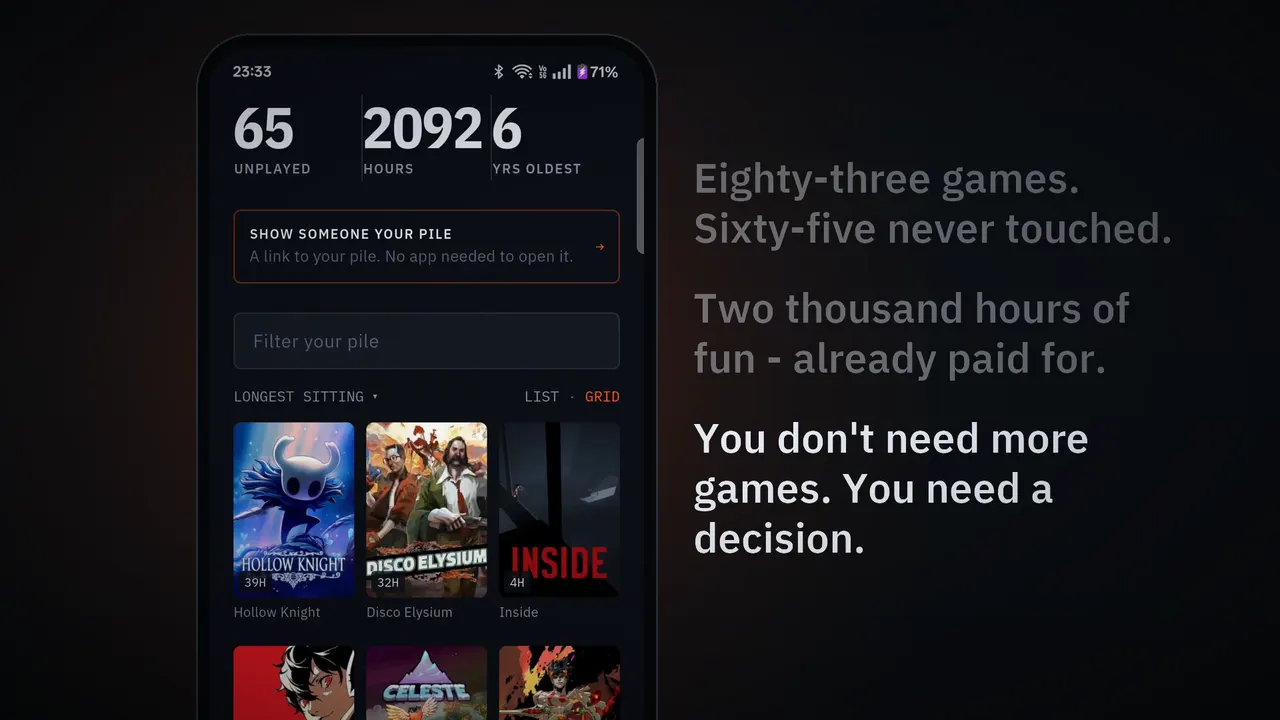
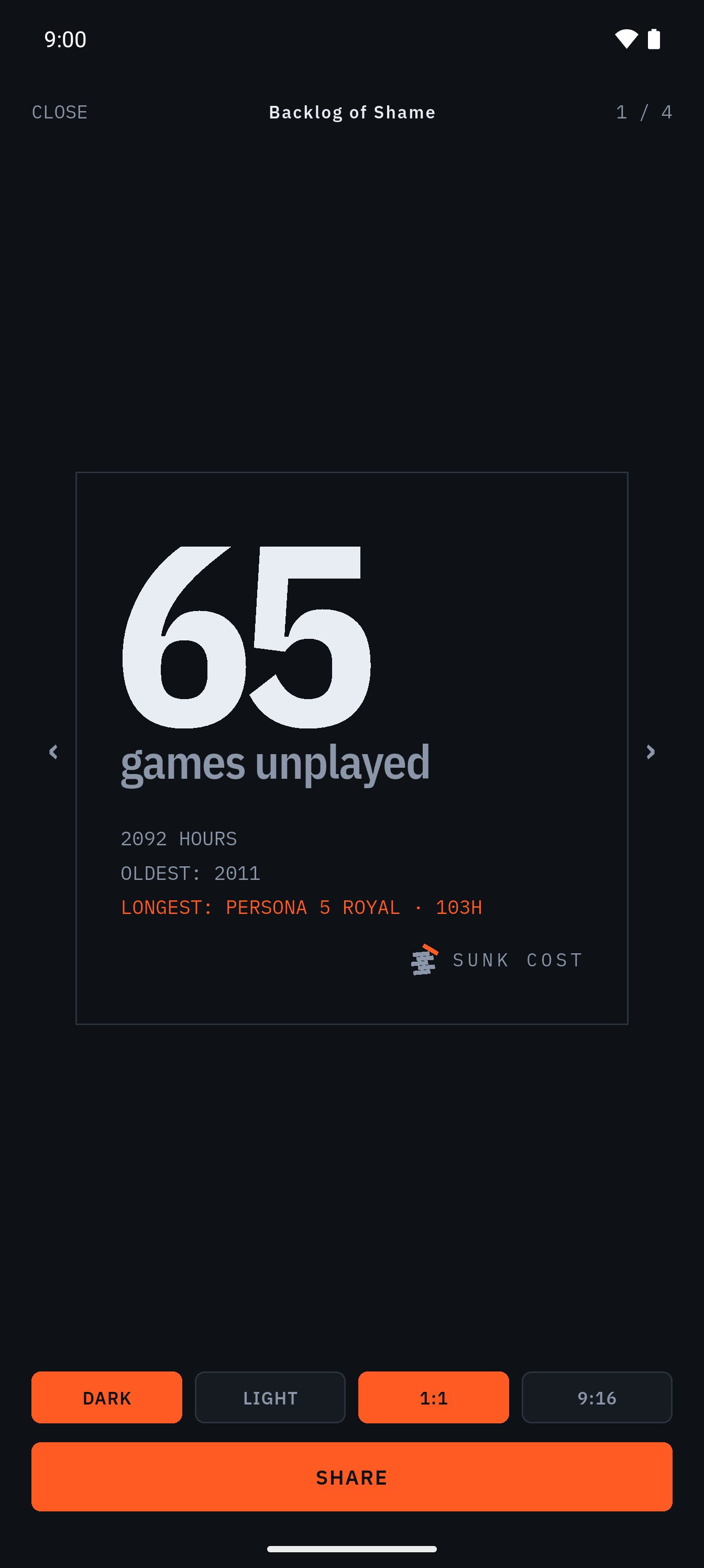
You own 83 games.
You have not played 65 of them.
You do not need more games. You need a decision. Sunk Cost is not a library — tell it how long you have got tonight and it answers with three games, never a list, and an argument for each.
OUT NOW ON ANDROID
Free on Google Play.
No account, no sign-in. Install it, add what you own, and ask it what to play tonight.
Get it on Google PlayOn iPhone?
Not built yet. Leave your email and you will hear the day it is — one email, nothing else.
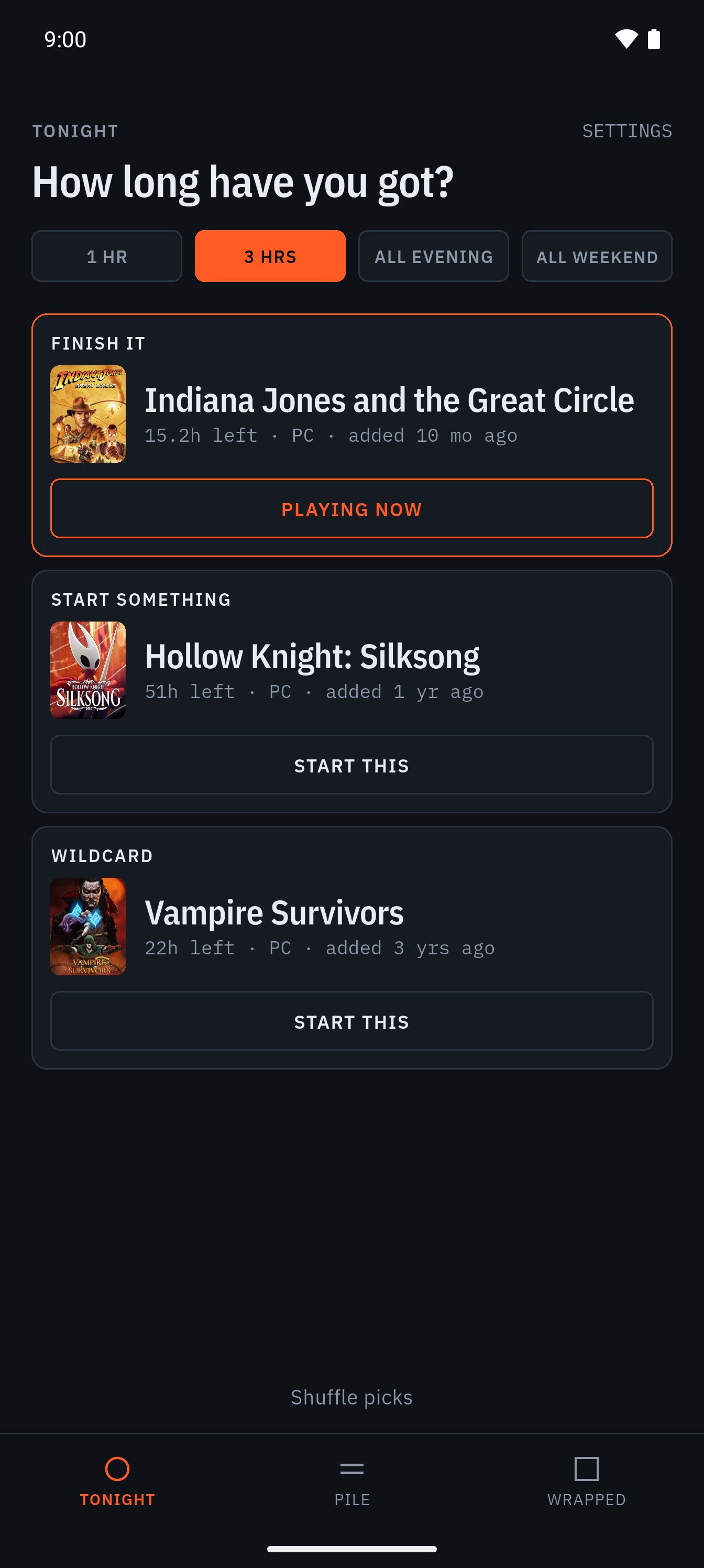
How long have you got?
An hour after work is a different question from a free Saturday, so the app treats it as one. Pick a session length and the three answers change.
- FINISH IT
Something you could actually clear tonight — measured against how long it takes if you push, not the leisurely estimate.
- START SOMETHING
The oldest thing you have never touched. You do not have to finish a game to start one, so length is no object here.
- WILDCARD
Anything else. Not argued for, which is the point.
See it in two minutes
Save it the moment you see it
A trailer goes past on TikTok, YouTube or Instagram, and by the time you next sit down to play you cannot remember what it was called. Share it to Sunk Cost and go back to your doomscrolling. It waits, link and all — the video, its title, and a still you will actually recognise weeks later. Store links from Steam, Epic, GOG, Nintendo, Xbox, itch.io and Humble resolve straight to the game.
Add a note while you still remember why, and who told you about it. A month later that is the difference between a game you play and a link you delete.
Games you want, not just games you own
A trailer is for something you do not own yet, so it does not belong in a backlog. Wanted games sit in their own list — out of the hours-owed arithmetic and out of tonight's picks — until the day you actually buy the thing.
Finish something, and say what you thought
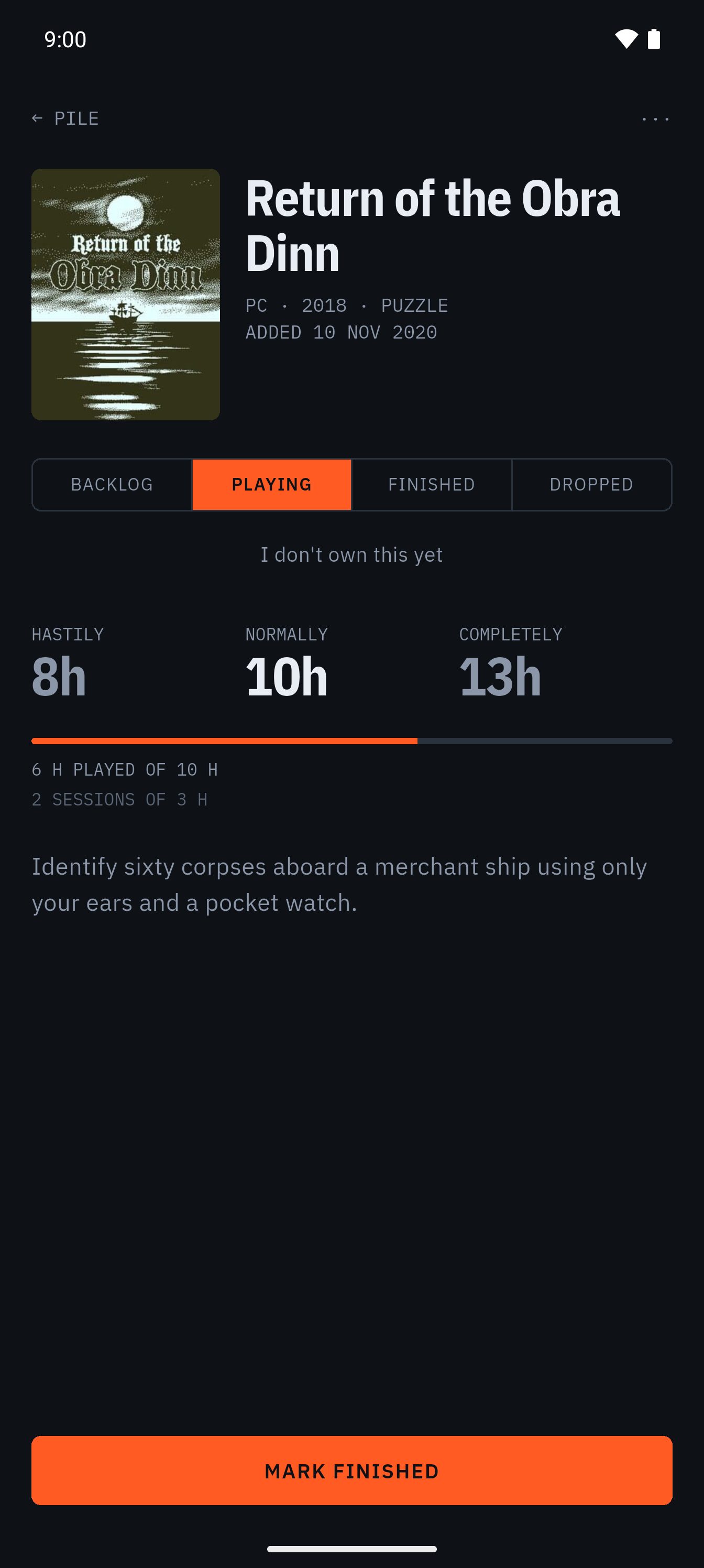
Played tonight? Log it, and the hours left shrink. Mark a game finished and it asks how it was, out of ten; roughly how long you actually put in; and one line on whether it was worth it. Thirty seconds, once, at the only moment you will ever remember the answer clearly.
That is the half of a backlog nobody tracks. A pile tells you what you owe; the finished shelf is the part that grows — ranked, rated, and in your own words.
It counts what you would rather not count
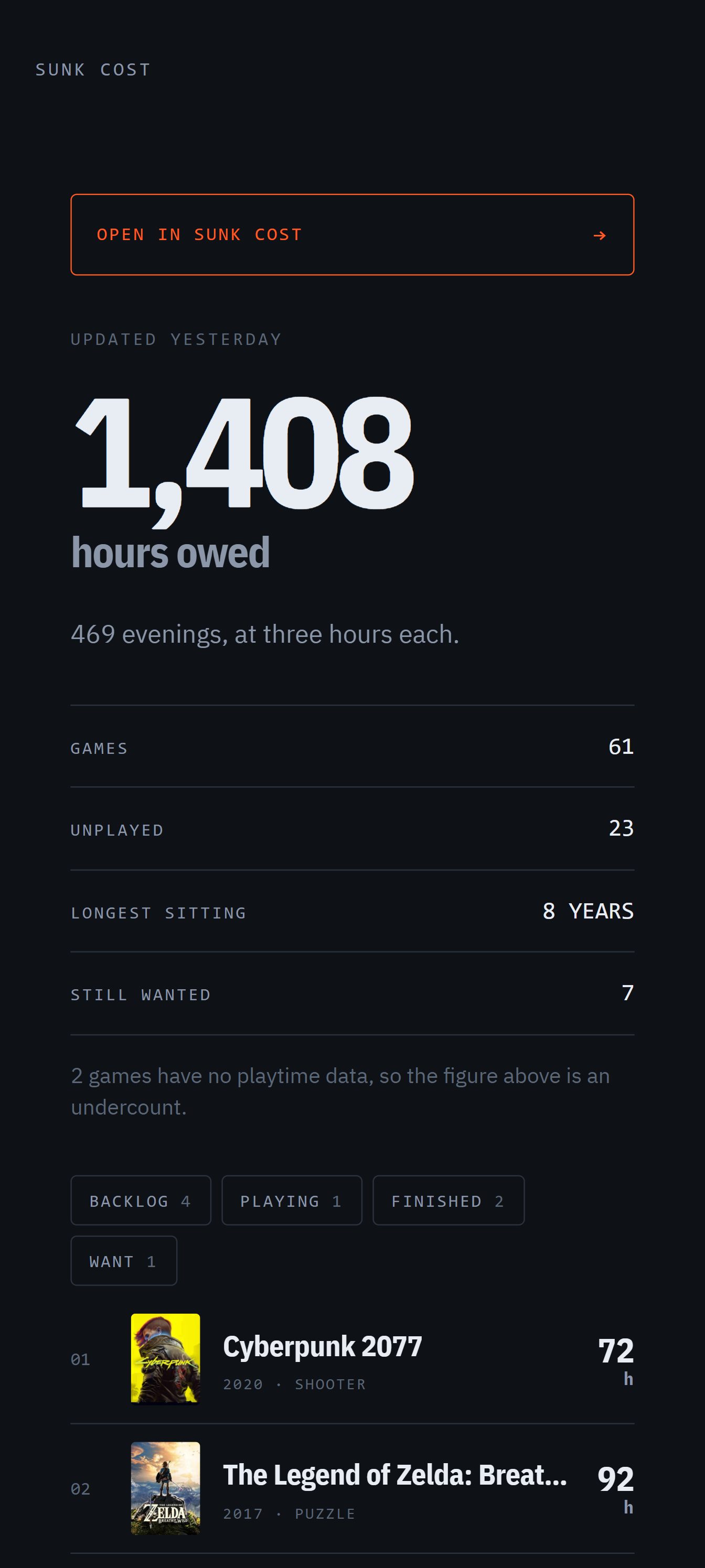
Hours owed. Years the oldest one has sat there. How many games you bought and never opened. It counts, and it does not soften the total.
Worth posting, not just worth knowing
Four share cards, built from your own numbers: the Backlog of Shame, your Year in Review, a ranked Top 10, and the Verdict on the one game you actually finished. Square for a feed, tall for a story, light or dark.
Typographic and deliberately without cover art, so they survive a screenshot on Discord or X and read as a statement rather than a promo. A backlog is funnier shared than hidden.
Show someone what you are sitting on
One link, and nobody needs the app to open it. They open it in a browser — no account, nothing to install — and see the hours you owe, the years your oldest game has been sitting, and what you have actually finished.
If they do have Sunk Cost, the same link opens there instead and does the thing a web page cannot: it compares. What you both own, what they have finished that you have not, and whose backlog is worse. Stop sharing whenever you like and the link dies with it.
One nudge, on a free evening
Three picks, ready before you have asked. Tap the notification and tonight's answers are already on screen — no scrolling your library to decide.
There are three kinds: the free-evening picks, a weekly word about whatever has been sitting longest, and a monthly statement of the pile. Every kind has its own on-off switch.
Yours, unless you say otherwise
No account and no sign-in. Your pile lives in a database on your phone, and nothing is uploaded until you choose to share it — at which point it is the games and the numbers, never your reviews or your notes. Revoking deletes the shared copy. The privacy policy says exactly what travels and what does not.
Get it
Sunk Cost is free on Google Play for Android. On iPhone? It is not built yet — join the iPhone waitlist and you will know the day it is.
Questions, or found something broken? Write to hello@sunkcost.app — see also what it costs and the support page.